





N
Sign in
Youth & AI Safety

Kids, screens and AI

What parents and educators need to know as AI reaches the classroom.

For Parents Research Industry Benchmarks Daily Updates

Latest Coverage

15 stories · auto-updated
DHS Inspector General Finds That TSA is Not Properly Safeguarding Passenger Facial Recognition DataFor Parents

DHS Inspector General Finds That TSA is Not Properly Safeguarding Passenger Facial Recognition Data

EFF legal intern Gabrielle Ladun was the principal author of this post. The Department of Homeland Security Office of Inspector General (DHS OIG) has published a summary of findings from its audit of the Transportation Security Administration’s (TSA) facial recognition technology. While the detailed findings are class…

Electronic Frontier Foundation2d ago
🗣 A Victory for Freedom of Speech Online | EFFector 38.18For Parents

🗣 A Victory for Freedom of Speech Online | EFFector 38.18

No one should have to think twice before criticizing the government online. But a mass surveillance program known as "Catch and Revoke" was created to make millions do just that. EFF and other defenders of free speech are fighting back. In our latest EFFector newsletter, we're talking about a key court win for our law…

Electronic Frontier Foundation3d ago
World’s largest health appointment platform dumps its web trackers after Markup investigationResearch

World’s largest health appointment platform dumps its web trackers after Markup investigation

Doctoralia said it was removing trackers that communicated with social media companies out of an abundance of caution

The Markup3d ago
As Federal Court Rules ALPRs are Mass Surveillance, EFF Gets Disappointing RulingFor Parents

As Federal Court Rules ALPRs are Mass Surveillance, EFF Gets Disappointing Ruling

In an extremely disappointing ruling, a California trial court dismissed SIREN v. San Jose, our case challenging the city of San Jose’s warrantless searches of its vast stores of Automatic License Plate Reader (ALPR) data. EFF and the ACLU of Northern California represent SIREN and CAIR California, two non-profits tha…

Electronic Frontier Foundation4d ago
Privacy's Defenders Podcast: No Privacy Without EncryptionFor Parents

Privacy's Defenders Podcast: No Privacy Without Encryption

When we communicate online today – from your personal emails and DMs to secure international commerce – we usually do so with encryption. Encryption converts readable data into unreadable gibberish to protect our privacy and security. This didn’t just happen organically. Three decades ago, the U.S government treated e…

Electronic Frontier Foundation4d ago
Open models have real benefits. Do they outweigh the risks?Research

Open models have real benefits. Do they outweigh the risks?

MIT Technology Review Explains: Let our writers untangle the complex, messy world of science and technology to help you understand what’s coming next. You can read more from the series here. Late last month, Anthropic released a report arguing that the model GLM-5.3 poses a major cyberattack risk. The report’s core co…

MIT Technology Review — AI4d ago
AI labs are buying data from dead startups to train their modelsResearch

AI labs are buying data from dead startups to train their models

When Keelan Miskell began winding down his crypto startup this year, he didn’t think its data was worth much: the users were anonymous, the company just a few years old. But he’s since turned the firm’s digital archives into real money. He’s netted roughly $25,000 for his code base and a still-pending amount (likely a…

MIT Technology Review — AI4d ago
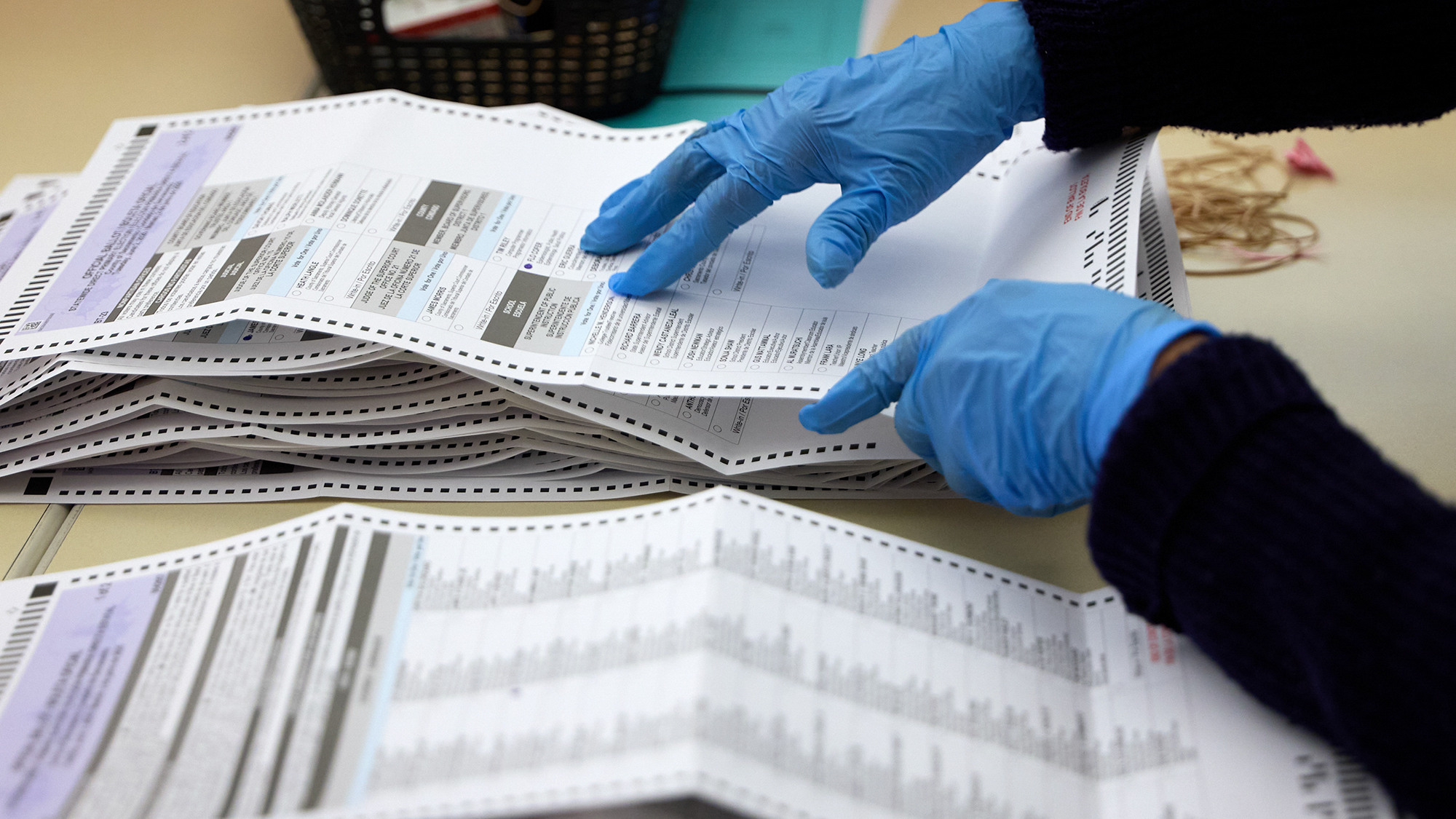
What it takes for voters to be resilience against AI misinformationResearch

What it takes for voters to be resilience against AI misinformation

A conversation with political scientist Thessalia Merivaki

The MarkupOct 10
Resisting the Menace of Federal Data ConsolidationFor Parents

Resisting the Menace of Federal Data Consolidation

In the past two years, the federal government has unlawfully consolidated data exposing our private information. This consolidation has been chaotic but generally came in three rolling waves: It started with DOGE, moved to agency-to-agency data sharing with ICE, and then attempted data-driven purges of state voter rol…

Electronic Frontier FoundationOct 9
Organizing in the Town at Oakland Tech WeekFor Parents

Organizing in the Town at Oakland Tech Week

EFF was thrilled to join organizers, advocates, and activists in the East Bay for the second annual Oakland Tech Week last week. We are grateful to our friends at MediaJustice and Upturn for inviting us co-present this all-day event, “Building Beyond Big Tech: Organizing Oakland’s Future”, on Sept. 30. The event, host…

Electronic Frontier FoundationOct 9
Turkish Crackdown On LGBTQ+ Organizations Threatens Freedom of Expression and AssociationFor Parents

Turkish Crackdown On LGBTQ+ Organizations Threatens Freedom of Expression and Association

EFF strongly condemns Turkey’s state-led discriminatory, oppressive attacks on feminist and LGBTQ+ organisations, media platforms, student groups, and rights defenders and activists within the country. Since mid-September, access to the websites and social media accounts of a dozen organizations have been blocked by c…

Electronic Frontier FoundationOct 9
We’re putting too much faith in AI’s ability to say noResearch

We’re putting too much faith in AI’s ability to say no

Ever since people first seriously contemplated giving machines an intelligence modeled on our own, there has never been any question that they would, like us, be able to say no. The sci-fi canon is full of stories of robotic disobedience. Most of these capers are, of course, cautionary. But recently, the idea that AI …

MIT Technology Review — AIOct 9
Roundtables: A Conversation With the Creator of AI-Designed VirusesResearch

Roundtables: A Conversation With the Creator of AI-Designed Viruses

Friday, October 16, 2026 Can AI design new life forms? In 2025, Stanford University PhD student Samuel King came up with a preliminary answer when he used a generative AI model to propose genetic blueprints for microscopic viruses. It isn’t yet an example of AI-generated life, but that could be next. Join senior AI re…

MIT Technology Review — AIOct 9
When No ID Means No Internet: Age Verification and the Right to Access InformationFor Parents

When No ID Means No Internet: Age Verification and the Right to Access Information

This post was co-authored by Sheila B. Lalwani, a doctorate student and recent COMPASS Fellow hosted by EFF. Age verification proposals are often presented as a simple tradeoff: sacrifice a little privacy to better safeguard children online. But that framing overlooks a more fundamental question. What happens to peopl…

Electronic Frontier FoundationOct 8
Research

Jennifer Huddleston and Sarah Myers West on Artificial Intelligence Regulation

AI Now's Co-Executive Director Sarah Myers West joined the Washington Journal to talk about how artificial intelligence should be regulated. The post Jennifer Huddleston and Sarah Myers West on Artificial Intelligence Regulation appeared first on AI Now Institute.

AI Now InstituteOct 8
Family Guides & Checklists

Research-backed, actionable.

Co-use AI for the first month

Sit with your child during early sessions so you both learn how it responds — and where it gets things wrong.

Turn off chat history & training

In ChatGPT, Gemini, and Copilot settings, disable model-training on your conversations to limit data exposure.

Verify before you trust

Cross-check any AI answer that affects health, money, homework grades, or real-world decisions against a primary source.

AI-free private spaces

Keep AI-enabled devices out of bedrooms and bathrooms. The AAP recommends screen-free zones for kids of all ages.

Ages 6–12

Talking to your kids about AI chatbots

Common Sense Media found 70% of teens already use generative AI, but most parents have never had a conversation about it. Early framing shapes lifelong digital judgment.

Quick checklist
  • Explain that chatbots predict words — they don't 'know' things the way a teacher does
  • Practice asking the same question two different ways and compare answers
  • Set a 'no personal info' rule: never share full name, address, school, or photos
  • Agree on what to do when an answer feels weird, scary, or wrong
  • Revisit the conversation every few months — the tools change fast
Read the research · Common Sense Media — AI guidance for families
Ages 10+

Spotting deepfakes & AI-generated content together

Stanford HAI's 2024 research shows even adults correctly identify AI images only ~60% of the time. Media literacy is now a core safety skill, not an elective.

Quick checklist
  • Look for warped hands, teeth, jewelry, and background text — common AI tells
  • Reverse-image search anything emotional or 'too perfect' before sharing
  • Check the original source — screenshots strip context for a reason
  • Watch for audio mismatches in videos (lip sync, breath, room tone)
  • Make a family rule: pause 10 seconds before resharing shocking content
Read the research · Stanford HAI — Generative AI & media literacy
All ages

AI privacy & data: what schools collect on your child

Investigations by The Markup and EFF show many ed-tech 'AI tutors' send student prompts, voice, and behavioral data to third parties — often without clear parental consent.

Quick checklist
  • Ask the school for a written list of every AI tool your child uses
  • Request the privacy policy and data-retention period for each one
  • Opt out of optional AI features when the school allows it
  • Check if student data is used to train commercial models — and say no
  • File a FERPA complaint if a vendor refuses to disclose data practices
Read the research · Electronic Frontier Foundation — Student privacy
Teens

Healthy boundaries with AI companions

The American Academy of Pediatrics and 5Rights Foundation warn that always-available AI 'friends' (Character.AI, Replika, Snapchat My AI) can displace real social connection and amplify isolation in vulnerable teens.

Quick checklist
  • Treat AI companions like social media — daily time caps, not unlimited
  • Never use AI as a substitute for crisis or mental-health support
  • Know the suicide & self-harm hotlines and keep them visible at home
  • Talk openly about why an AI might feel like a 'safe' confidant — and the limits
  • Watch for withdrawal from real friendships as a warning sign
Read the research · 5Rights Foundation — Children & AI
Ages 10–18

Homework, AI, and academic honesty

UNICEF and MIT Technology Review report that students who use AI to skip thinking — rather than to learn — show measurable declines in writing and reasoning skills within one semester.

Quick checklist
  • Use AI to brainstorm or explain — not to write the final answer
  • Always disclose AI use to teachers when policy requires it
  • Rewrite anything AI produces in your own voice and check every fact
  • Keep a 'process file' showing your own outline, drafts, and sources
  • Know your school's AI policy by name — penalties vary widely
Read the research · UNICEF — AI for Children policy guidance
All ages

Building a Family AI Agreement

NIST's AI Risk Management Framework recommends written, plain-language norms — the same principle works at home. A one-page family agreement turns vague rules into shared expectations.

Quick checklist
  • List which AI tools are approved (and which aren't) by name
  • Set screen-time limits and AI-free hours (meals, bedtime)
  • Agree on what's never shared with AI: photos, full names, locations
  • Define consequences together — and what earns more autonomy
  • Sign and post it on the fridge. Review every 3 months
Read the research · NIST — AI Risk Management Framework
Resources for parents & families

Trusted starting points for the AI conversation at home.

How this hub works

Curated daily. Sourced transparently. Always linked back.

01 · Aggregate
We pull the latest research and reporting from 11 institutes — including Stanford HAI, MIT Tech Review, NIST, UNICEF, and Common Sense Media.
02 · Categorize
Every story is tagged for parents, researchers, or policy/benchmark audiences so the right reader finds the right piece fast.
03 · Link out
Stories open at the original publisher when you click — we never wrap, paywall, or rewrite their work.